
How to Budget for Vet Bills: Emergency Funds, Pet Insurance, and Smart Planning
Pet Parenting
April 3, 2026
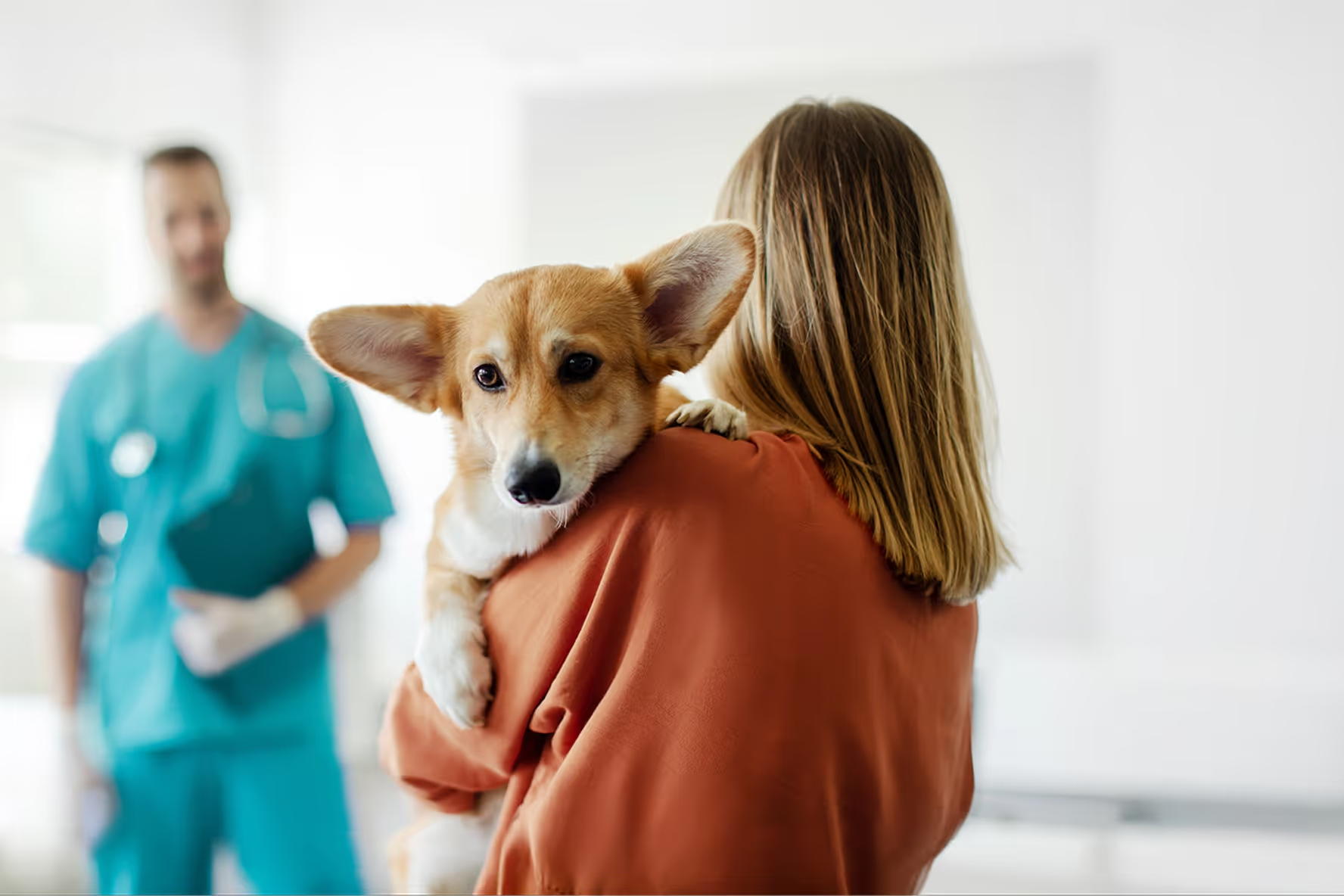
Hearing that your beloved fur baby is sick can be one of the hardest moments of pet parenthood. Whether it’s a chronic condition, an unexpected injury, or a cancer diagnosis, the initial wave of information from your veterinarian often comes with equal parts relief and confusion. Relief, because you finally have an answer to what’s been troubling your pet. Confusion, because diagnoses can be complex, treatments vary, and the stakes feel impossibly high. You have to make decisions on behalf of a member of your family, who can’t say what their preferences are nor understand what is going on.
This is where a second opinion can become a vital tool in your decision-making process. Seeking another veterinarian’s perspective doesn’t mean you don’t trust your current vet—it just means you care deeply about making the best possible decision for your pet’s health and quality of life. In fact, many veterinarians encourage clients to seek second opinions, especially when the diagnosis is complicated or the treatment plan will be a big change in your pet’s quality of life.
At the simplest, it’s asking another professional to double check that the first diagnosis or prognosis is accurate, additionally it can be to check that a treatment plan is the best route forward for your pet. You could have another general practitioner check in with your pet to see if they come to the same conclusion as the first veterinarian or it could mean seeing a specialist. For cases involving cancer, neurological issues, orthopedic concerns, or other complex health problems, a referral to a board-certified specialist can provide new insights into your pet’s condition and the treatment options available.
A second opinion usually involves a full review of your pet’s medical history and test results, so your new veterinarian (general, or specialist) can approach the situation with a full picture of your fur baby’s health. They will then do their own physical exam to fully evaluate your pet and things can progress and change over time especially if the disease is starting to declare itself more fully than it was a few weeks prior. It’s beneficial to have multiple sets of diagnostics, as sometimes a second test can find something additional, or the extra data can make it easier to distinguish a pattern. Your second opinion vet will use the information that your GP provides, along with their own analysis, and provide their own perspective on treatment options, risks, costs, and potential outcomes.1,4
It’s important to remember that getting a second opinion shouldn’t feel like you are undermining your current vet, because it absolutely is not. This second opinion is for the sake of building a complete picture and giving yourself the confidence in whatever decision you will eventually make about your pet’s health.
While any pet parent is well within their right to request a second opinion, below are a few reasons why you may be encouraged to do so:1
It is important to remember that even if the above scenarios do not apply to you, if you would feel better getting a second opinion, then you absolutely should. There is no harm in being absolutely certain.
Before your appointment you’ll want to be prepared with anything that your second opinion may need: Test Results (bloodwork, biopsies, urinalysis, etc.), imaging (X-rays, ultrasounds, MRI’s, etc.), medication list, and other notes (on symptoms, behaviors, timelines, anything that you noticed that brought you to the vet for your first opinion).
Having all documentation at your easy disposal can help your second veterinarian hit the ground running and assess which additional diagnostic practices may help get a fuller picture.
If you are getting a second opinion, then there is at least a little bit of doubt that you are experiencing in regards to the initial diagnosis. With your second vet, voice these hesitations in the form of questions, which will highlight for your vet where your concerns lay and allow them to address those hesitations through the second diagnosis process.
Narrowing down your questions into categories can help.
Some pet parents worry about offending their primary or original vet by seeking another opinion. In reality, most veterinarians respect your decision and welcome collaboration. Their goal is to get your pet the best care possible, and if having more eyes on the problem will help, then that’s what your pet needs to get their best care. Be upfront with your original vet and let them know that you’d like another perspective. And share any new insights with them afterward.
Getting referred to see a specialist is more than getting a second opinion. This is the next step in getting more information and treatment in complex disease scenarios. Your primary veterinarian is familiar with specialists and many recommend seeing them for difficult cases like cancer.5
When the situation is complicated—especially if cancer is involved—it may be time to seek out a specialist. Not all veterinarians are trained to manage advanced diseases, but specialists can offer advanced diagnostics, clinical trial opportunities, and cutting-edge treatments.2
This is where knowing the steps to find the best fit of an oncologist comes in. Especially if you are looking to take your pet’s treatment into your own hands, having your own techniques to find a specialist can help you feel a bit more confident in the process moving forward. Read through our post, How to Find the Right Veterinary Oncologist for Your Pet’s Needs, to find out exactly what to ask, how to evaluate credentials, and how to make sure the oncologist you choose aligns with your pet’s needs and your family’s goals.
References: