Our Science

Live cancer cells meet artificial intelligence

By combining patient-derived functional data with artificial intelligence, our platform provides quantitative insights into ex vivo drug response dynamics.
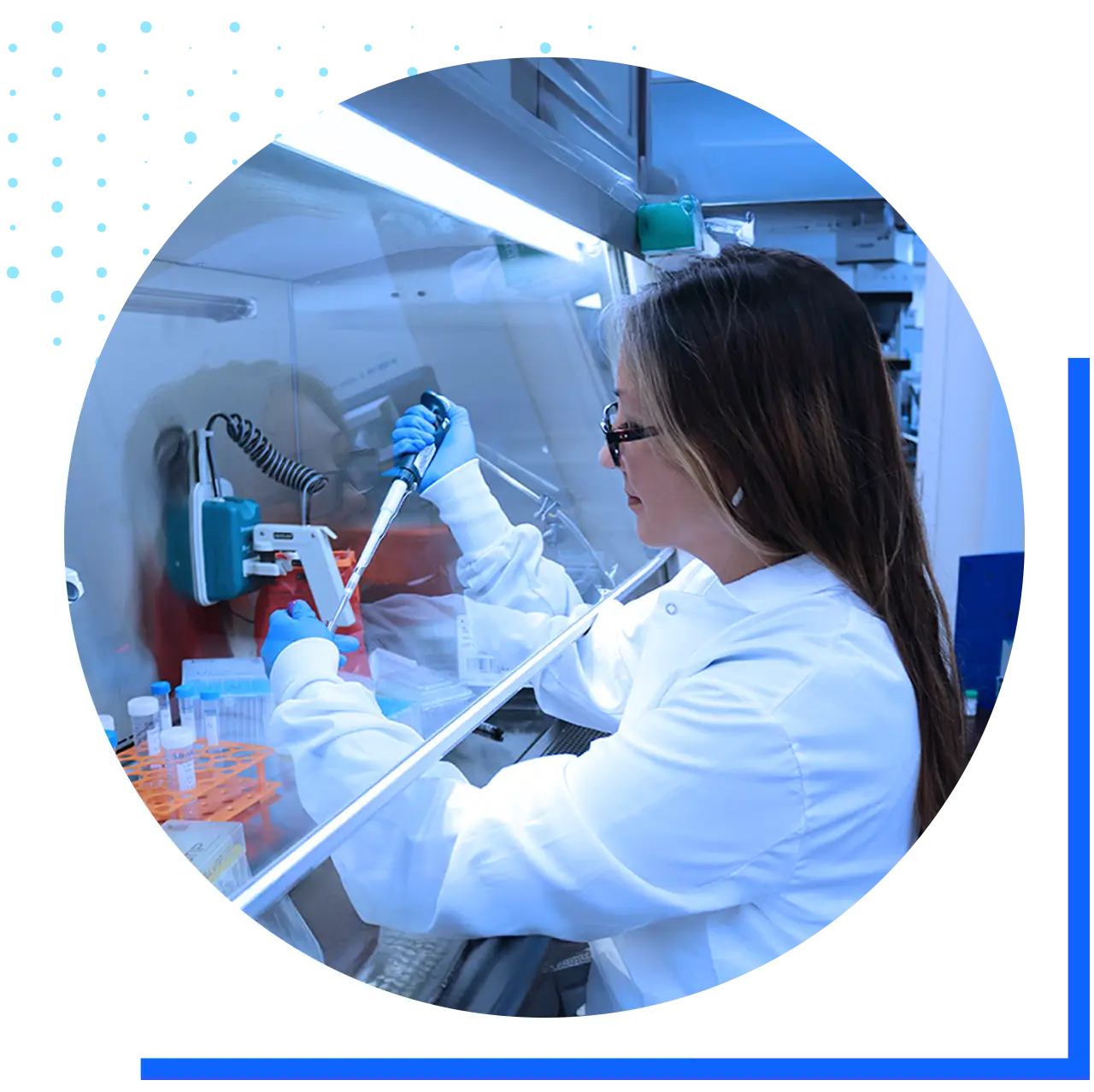

Scientist wearing a white lab coat and blue gloves using a pipette inside a laboratory biosafety cabinet.

What is precision medicine?

Every patient is unique, so two patients with the same medical condition may respond differently to the same therapeutic protocol. Precision medicine is an emerging approach for improving the success rate of patient care by identifying the treatment options most likely to be effective for the individual.

What is functional precision medicine?
Functional precision medicine is a strategy in which live patient cells (such as tumor cells) are directly exposed to various drugs in a laboratory to observe their real-time response, providing personalized data to guide the most effective treatment for that specific individual.

Our Approach

How the ImpriMed approach is different

Innovative Approach to Cancer Care

Our approach is “functional” because we directly test how effectively anticancer drugs disrupt the normal functioning of a patient's live cancer cells. ImpriMed’s approach to precision oncology is unique in several ways.

  1. Our platform applies machine-learning methodologies to analyze ex vivo drug response patterns, enabling comparative assessment of therapeutic activity across diverse disease and molecular contexts.
  2. Our platform has been validated in the animal health setting, drawing on thousands of real-world clinical outcomes generated from canine lymphoma and leukemia patients, demonstrating its translational potential for human precision medicine.
  3. We use multiple different tests to analyze and predict tumor cell vulnerabilities; we innovate the best tumor profiling technologies from genetic and cellular profiling methods to our proprietary robotic platform that tests drugs on samples of patient-derived live tumor cells.

Together, these capabilities generate quantitative, data-driven insights that support oncology research, therapeutic hypothesis generation, and data-informed evaluation within precision oncology programs.

Scientist wearing purple gloves and a lab coat using a pipette to transfer liquid into a small test tube in a lab setting.
ImpriMed’s transport medium and logistics

How do we get live cancer cells to the lab for testing? This is a real challenge for most companies.

The logistics associated with keeping cells alive long enough to be tested are difficult to overcome. ImpriMed innovated past these challenges by developing a proprietary transport medium that keeps cells healthy during shipping.

Illustration of a mailer box filled with ImpriMed's proprietary transport media tubes

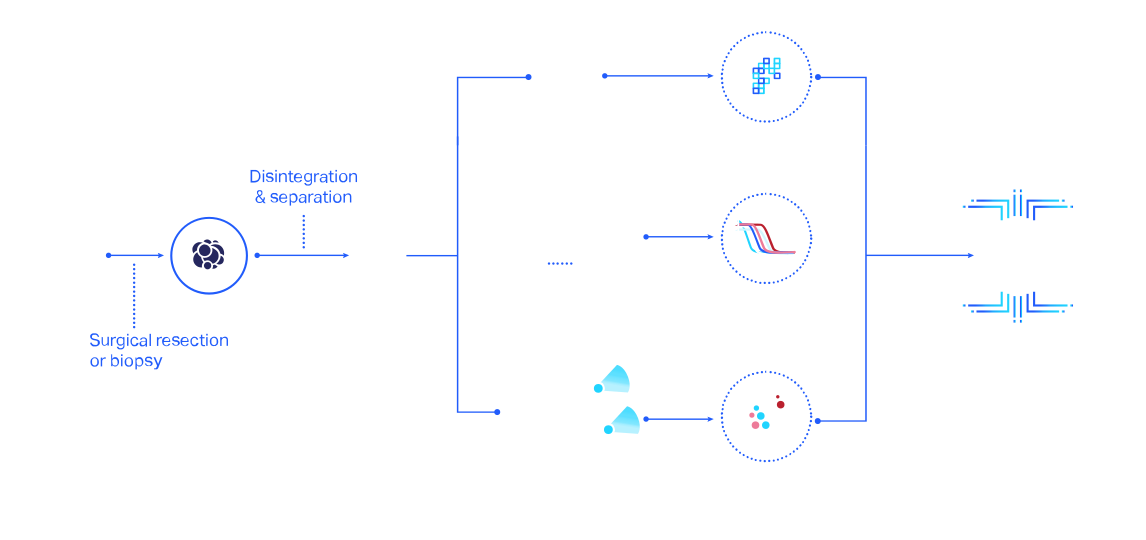
When we receive live cancer cell samples, we conduct the following tests at our lab in California:

Drug sensitivity shows how effectively a drug can kill live cancer cells. Your novel compound can be tested using our test platform to identify the best development plan.

Flow cytometry quantifies the levels of different proteins found on and within tumor cells. This test provides prognostic and diagnostic information.
Artificial Intelligence

How we collect clinical evidence and use proprietary artificial intelligence models

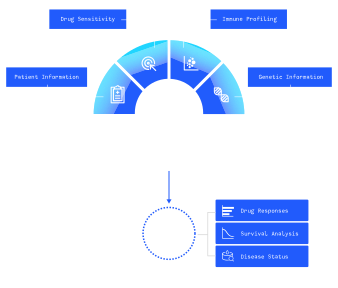
ImpriMed uses multimodal AI to improve treatment outcomes

To determine which drugs elicit a positive clinical response, we conducted an initial study to collect real-world data. We used the data from this clinical study to train AI models so they can predict the ways in which individual patients will respond to a panel of commonly used anticancer drugs. After the initial clinical study, we partner with our amazing network of customers to continuously grow our database of clinical outcomes. These data are added to our existing database and used to further refine the AI models.

Validations

Read our peer-reviewed scientific papers

Based on our established technology and workflow, we performed clinical studies to evaluate correlation between our predictive value and the actual clinical response to various anticancer drugs.
Human Precision Medicine

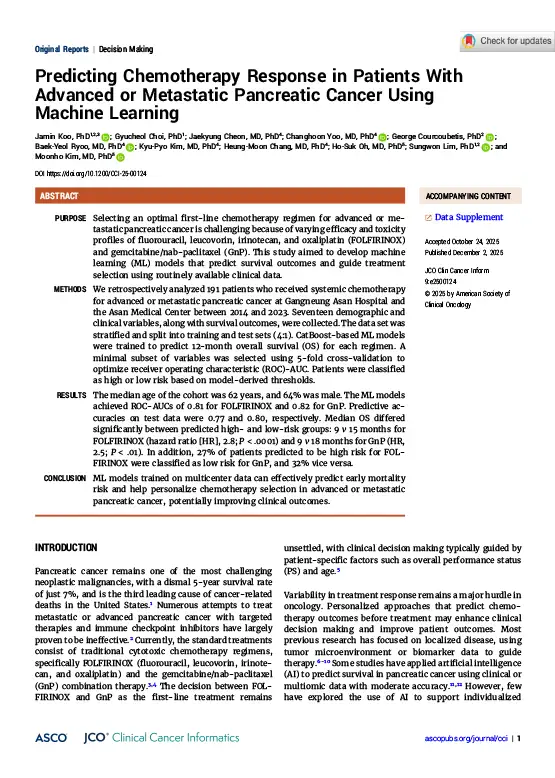
Research article titled 'Predicting Chemotherapy Response in Patients With Advanced or Metastatic Pancreatic Cancer Using Machine Learning' with abstract and introduction sections explaining study purpose, methods, results, and conclusion on chemotherapy regimen optimization.

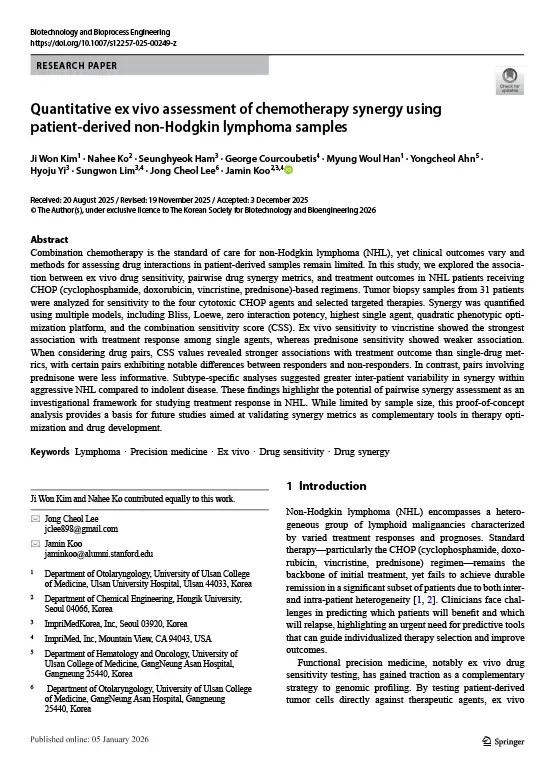
Published in Biotechnology and Bioprocess Engineering, Jan 2026

Quantitative ex vivo assessment of chemotherapy synergy using patient-derived non-Hodgkin lymphoma samples
Read the Full Article
Research article titled 'Predicting Chemotherapy Response in Patients With Advanced or Metastatic Pancreatic Cancer Using Machine Learning' with abstract and introduction sections explaining study purpose, methods, results, and conclusion on chemotherapy regimen optimization.

Published in JCO Clinical Cancer Informatics, Dec 2025

Predicting Chemotherapy Response in Patients With Advanced or Metastatic Pancreatic Cancer Using Machine Learning
Read the Full Article
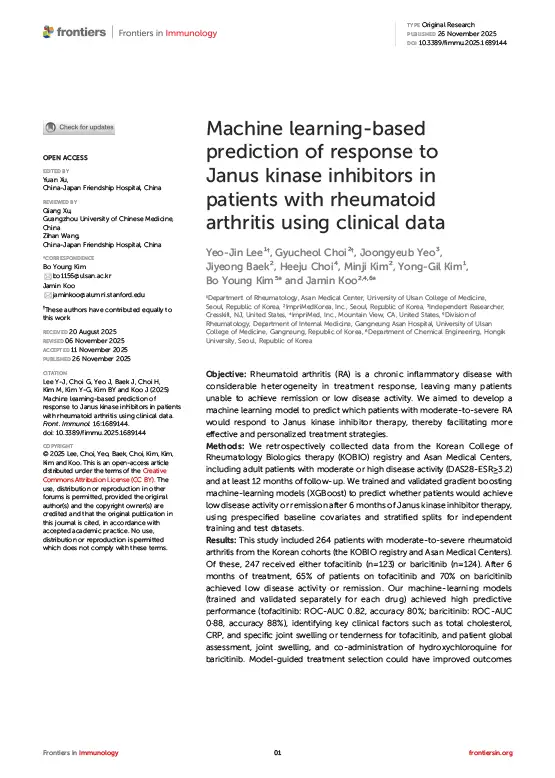
Research article titled 'Machine learning-based prediction of response to Janus kinase inhibitors in patients with rheumatoid arthritis using clinical data' published in Frontiers in Immunology, showing authors, affiliations, and the article's objective, methods, and results summary.

Published in Frontiers in Immunology, Nov 2025

Machine learning-based prediction of response to Janus kinase inhibitors in patients with rheumatoid arthritis using clinical data

Read the Full Article

Published in Blood Research, Nov 2024

Recent advances in and applications of ex vivo drug sensitivity analysis for blood cancers

Read the Full Article

Poster abstract presented in The 65th ASH Annual Meeting, Nov 2023

Prognostic Utility of the Patient-Derived AML Cells' Ex Vivo Drug Sensitivity Results

Read the Full Abstract
First page of Prognostic value of European Leukemia Net 2022 criteria and genomic clusters using machine learning in older adults with acute myeloid leukemia, published Sept 2023

Published in Haematologica, Sept 2023

Prognostic value of European Leukemia Net 2022 criteria and genomic clusters using machine learning in older adults with acute myeloid leukemia

Read the Full Article
ImpriMed's article on "ML-based sequential analysis to assist selection between VMP and RD for newly diagnosed multiple myeloma" was published in npj precision oncology

Published in npj Precision Oncology, May 2023

ML-based sequential analysis to assist selection between VMP and RD for newly diagnosed multiple myeloma

Read the Full Article

Veterinary Precision Medicine

Identification of novel genetic mutations for the treatment prognostication of canine lymphoma

Published in npj Precision Oncology, Jun 2025

Identification of novel genetic mutations for the treatment prognostication of canine lymphoma

Read the Abstract
A study on the relationship between MDR1 mutation and ex vivo drug sensitivities of canine lymphomas

Published in Biotechnology and Bioprocess Engineering, Jan 2025

A study on the relationship between MDR1 mutation and ex vivo drug sensitivities of canine lymphomas

Read the Abstract
First page of Predicting Dynamic Clinical Outcomes of the Chemotherapy for Canine Lymphoma Patients Using a Machine Learning Model published by Veterinary Sciences in Dec 2021

Published in Veterinary Sciences, Jul 2024

Prognostic Utility of the Flow Cytometry and Clonality Analysis Results for Feline Lymphomas

Read the Full Article
First page of Multimodal machine learning models identify chemotherapy drugs with prospective clinical efficacy in dogs with relapsed B-cell lymphoma published by Frontiers in Oncology in Feb 2024

Published in Frontiers in Oncology, Feb 2024

Multimodal machine learning models identify chemotherapy drugs with prospective clinical efficacy in dogs with relapsed B-cell lymphoma

Read the Full Article
First page of Predicting Dynamic Clinical Outcomes of the Chemotherapy for Canine Lymphoma Patients Using a Machine Learning Model published by Veterinary Sciences in Dec 2021

Published in Veterinary Sciences, Dec 2021

Predicting Dynamic Clinical Outcomes of the Chemotherapy for Canine Lymphoma Patients Using a Machine Learning Model

Read the Full Article
First page of Predicting likelihood of in vivo chemotherapy response in canine lymphoma using ex vivo drug sensitivity and immunophenotyping data in a machine learning model by Veterinary Comparative Oncology in Oct 2020.

Published in Veterinary and Comparative Oncology, Oct 2020

Predicting likelihood of in vivo chemotherapy response in canine lymphoma using ex vivo drug sensitivity and immunophenotyping data in a machine learning model

Read the Full Article
Presentations
Presentations
Veterinary Cancer Society logo

Impact of AI on clinical practice and outcome

Veterinary Cancer Society Annual Conference 2023
Learn More →
Presentations
Veterinary Cancer Society Logo

Canine Lymphoma Diagnostics Past, Present and Future: How AI technology and genetics are pushing the boundaries in veterinary medicine

Veterinary Cancer Society Annual Conference 2023
Learn More →
Presentations
Veterinary Cancer Society logo

ImpriMed: AI-driven Personalized Medicine for Pet Cancer Care

Veterinary Cancer Society-Veterinary Society of Surgical Oncology Collaborative Conference 2023
Learn More →
Presentations
Precision Medicine World Conference logo

Reinventing precision medicine: from dogs to humans

Precision Medicine World Conference 2023
Learn More →
Presentations
Veterinary Cancer Society logo

ImpriMed Research Update

Veterinary Cancer Society Annual Conference 2022
Learn More →
Presentations
Veterinary Cancer Society Logo

Identification of Novel Predictive Biomarkers of Anticancer Drug Responses in Canine B-Cell Lymphoma Using Targeted NGS

Veterinary Cancer Society Annual Conference 2022
Learn More →
Presentations
Veterinary Cancer Society logo

ImpriMed Research Update

Veterinary Cancer Society Mid-Year Conference 2022
Learn More →
Presentations
Veterinary Cancer Society Logo

Drugs predicted to be effective using artificial intelligence (AI) double the clinical response rate in canines with relapsed B-cell lymphoma

Veterinary Cancer Society Mid-Year Conference 2022
Learn More →
Presentations
Animal Health, Nutrition and Technology Innovation Europe logo

Precision medicine for pet cancer care

Animal Health, Nutrition and Technology Innovation Europe 2022
Learn More →
Presentations
Veterinary Cancer Society Logo

ImpriMed: Experiences from the eyes of an oncologist in clinical practice

Veterinary Cancer Society Annual Conference 2021
Learn More →
Presentations
Veterinary Cancer Society Logo

Predicting dynamic clinical outcomes of (L-)CHOP chemotherapy for canine lymphoma patients using an artificial intelligence model

Veterinary Cancer Society Annual Conference 2021
Learn More →
Presentations
Veterinary Cancer Society logo

ImpriMed: A data-driven, personalized chemotherapy drug testing service for canine blood cancer patients

Veterinary Cancer Society Annual Conference 2021
Learn More →
Presentations
Veterinary Cancer Society Logo

Predicting likelihood of in vivo chemotherapy response in canine lymphoma using ex vivo drug sensitivity and immunophenotyping data in a machine learning model

Veterinary Cancer Society Annual Conference 2020
Learn More →
Presentations
World Veterinary Cancer Congress logo

Individualizing chemotherapy for canine lymphoma based on ex vivo drug sensitivity test

World Veterinary Cancer Congress 2020
Learn More →
Presentations
Precision Medicine World Conference logo

From dog to human: precision medicine for comparative oncology

Precision Medicine World Conference 2020
Learn More →
Presentations
NYC Oncology Conference 2019

ImpriMed: precision medicine for pet cancer care

NYC Oncology Conference 2019
Learn More →
Presentations
Veterinary Cancer Society Logo

Individualizing chemotherapy for canine lymphoma based on ex vivo drug sensitivity test

Veterinary Cancer Society Annual Conference 2019
Learn More →